 Business License
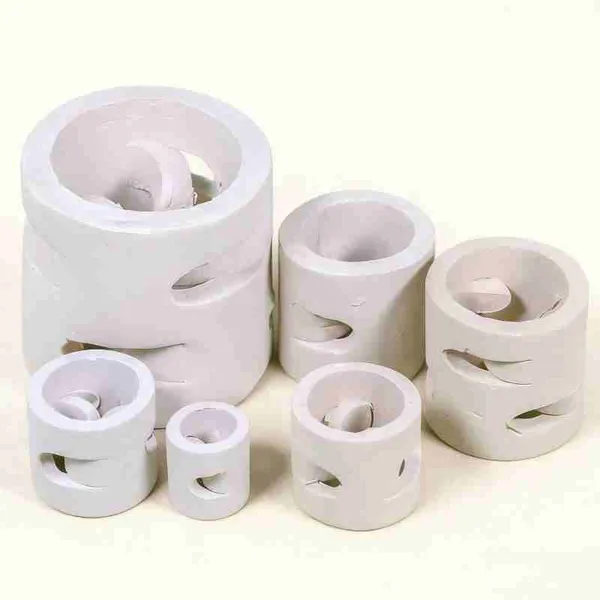
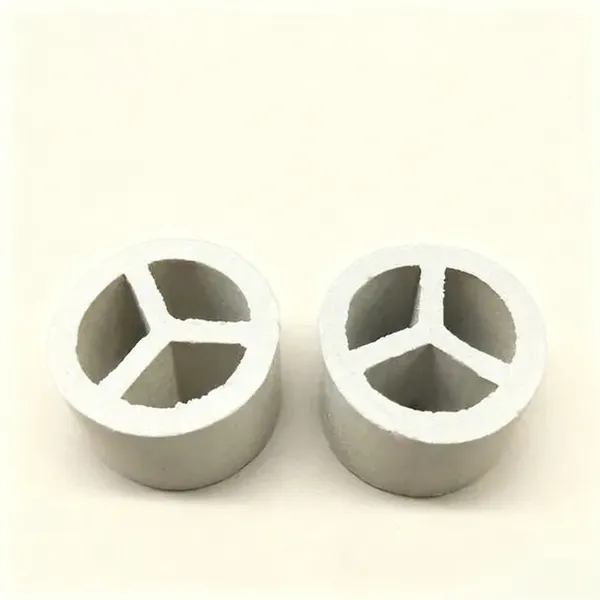
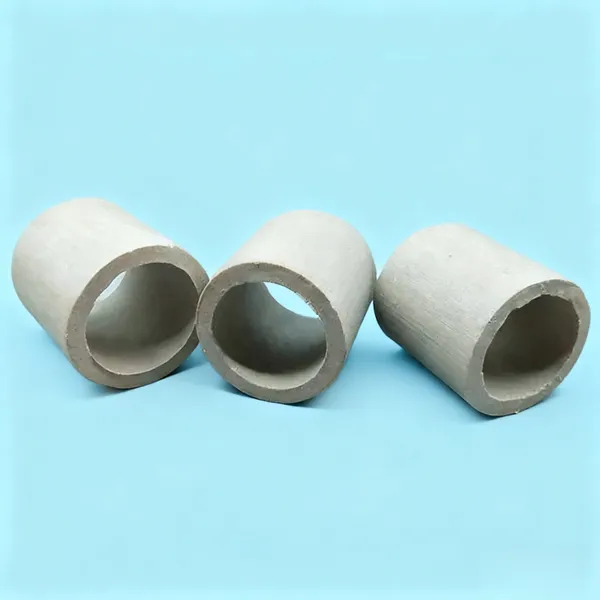
Pingxiang Daier Ceramic Butterfly TY Ring Random Packing for High-Temperature Corrosive Service
Engineering Challenge: Packed Tower Performance Under Extreme Conditions
In chemical processing, metallurgical operations, coal gasification, and oxygen production, process engineers routinely face a dual constraint: tower internals must withstand temperatures exceeding 300°C while resisting aggressive mineral acids—sulfuric, nitric, hydrochloric, and others. Under these conditions, metal packing suffers pitting and uniform corrosion; plastic packing softens, deforms, and loses structural integrity.
Ceramic materials become the only viable engineering option.
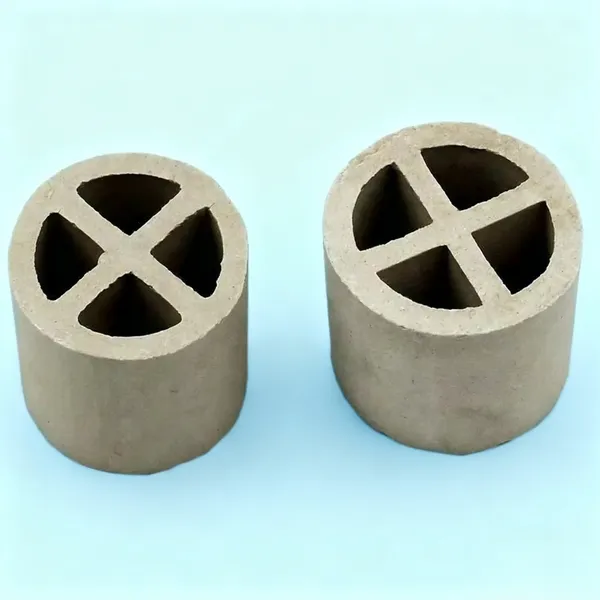
The Ceramic Butterfly TY Ring (also referred to as Ty-Pak) is a random packing geometry specifically engineered for these extreme service conditions.
The DAIER Solution: Geometry + Material
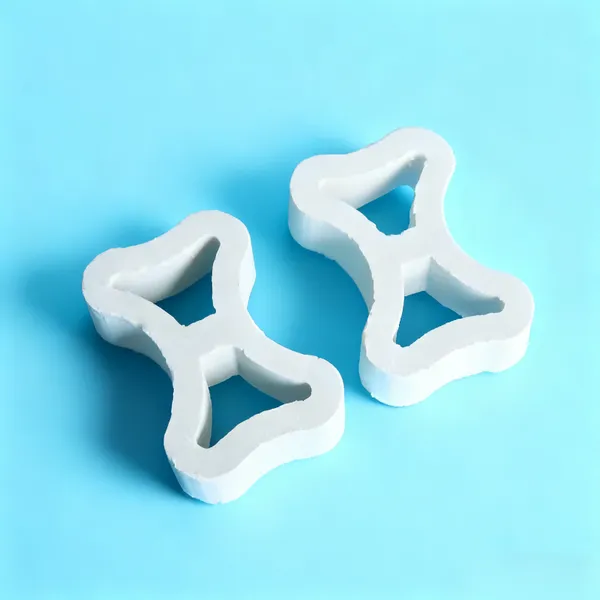
Butterfly Profile Engineering
The butterfly-shaped profile creates a self-aligning, interlocking structure when randomly dumped into a tower bed. Unlike conventional rings that settle and compact over time, the butterfly geometry maintains consistent void distribution throughout the service life. This prevents two common failure mechanisms in packed beds:
Channeling – preferential gas/liquid flow paths that reduce mass transfer efficiency
Settling – gradual compaction that increases pressure drop and reduces throughput
The design enables faster loading and provides approximately 20% lower pressure drop compared to 1-inch ceramic saddles under equivalent operating conditions.
Material: Chemical Porcelain Composition
Pingxiang D-A-I-E-R manufactures Ceramic Butterfly TY Rings from high-quality solid-pressed silicate porcelain with alumina content (Al₂O₃) in the range of 17-23%. The material specification delivers:
| Parameter | Value | Engineering Significance |
|---|---|---|
| Alumina Content | 17-23% | Provides mechanical strength and chemical inertness |
| Operating Temperature | Up to 920-1100°C | Stable operation in high-temperature towers |
| Specific Gravity | 2.25-2.35 g/cm³ | Predictable bed weight for structural design |
| Moisture Absorption | <0.5% | Prevents degradation from cyclic wetting/drying |
| Acid Resistance | > 99.6% | Compatible with sulfuric acid drying, HCl absorption, etc. |
| Moh's Hardness | > 6.5 scale | Abrasion resistance for long-term service |
| Average Heat Capacity | 0.22 cal/g·°C (20-500°C) | Thermal stability during process upsets |
| Porosity | <1.0% | Dense structure for high crush strength |
Chemical Resistance Note: The material resists all inorganic acids, organic acids, and organic solvents with the sole exception of hydrofluoric acid (HF).
Performance Verification: By the Numbers
Pressure Drop: 20% lower than 1-inch saddles—translates to reduced blower/compressor energy consumption
Thermal Stability: Service temperature up to 1100°C for sustained high-temperature operation
Chemical Durability: Acid resistance > 99.6%, compatible with sulfuric acid drying and SO₃ absorption towers
Consistent Performance: Butterfly geometry prevents channeling and settling, maintaining specified mass transfer efficiency over time
Low Moisture Absorption: <0.5% ensures structural integrity in wet/dry cycling
Available Specifications
| Nominal Size | Dimensions (mm) | Specific Surface (m²/m³) | Void Volume (%) | Packing Density (kg/m³) |
|---|---|---|---|---|
| 19 mm (3/4") | 38×26×11×4.5 | 335 | 71 | 570 |
| 25 mm (1") | 52×28×12.5×5 | 255 | 72 | 620 |
| 38 mm (1-1/2") | 62×41×15×5.5 | 160 | 74 | 630 |
Custom dimensions are available upon request with engineering drawing approval.
Application Scenarios (Industry Solutions)
The Ceramic Butterfly TY Ring is specified for the following tower types across multiple industries:
| Industry | Tower Type | Process Objective |
|---|---|---|
| Sulfuric Acid Production | Drying Tower | Concentrated sulfuric acid removes moisture from incoming gas |
| Sulfuric Acid Production | Absorption Tower | SO₃ absorption into sulfuric acid |
| Chlor-Alkali | Chlorine Drying Tower | Wet chlorine gas dehydration |
| Metallurgy | Scrubbing/Cooling Tower | High-temperature flue gas cooling and particulate removal |
| Coal Gas Industry | Washing/Regeneration Tower | Acid gas absorption and solvent regeneration |
| Oxygen Production | Drying Tower | Compressed air deep drying |
| Chemical Processing | Distillation/Absorption Column | Separation of corrosive organic/inorganic mixtures |
| Environmental | RTO Systems | Heat transfer media for regenerative thermal oxidizers |
Installation Considerations
Bed Support: TY Rings require a suitable support plate or grid at the bottom of the packed bed. The support must accommodate the ring geometry while allowing gas and liquid passage.
Dumping Method: Rings should be dumped uniformly across the tower cross-section to minimize size segregation and achieve consistent bed density.
Bed Height: Maximum recommended bed height per section depends on tower diameter and operating pressure. Contact D-A-I-E-R engineering for sectioning recommendations.
Liquid Distribution: For towers above 1.5 meters diameter, a liquid distributor is recommended above the packed bed to ensure uniform wetting.
Why Pingxiang D-A-I-E-R
Pingxiang D-A-I-E-R Separation Tech (spelled D-A-I-E-R) is a Taiwan-invested manufacturer based in Pingxiang, Jiangxi, China—the globally recognized capital of ceramic packing manufacturing. Since 2009, D-A-I-E-R has specialized in tower packing and internals for chemical, petrochemical, and environmental applications.
Quality Assurance: Each batch is subject to:
Visual inspection for dimensional conformity
Porosity and density verification
Chemical composition analysis (Al₂O₃ content)
Thermal shock testing per customer specification
Technical Resources
For detailed technical datasheets, including pressure drop curves, HETP correlations, and installation guides for specific operating conditions, visit the D-A-I-E-R technical library:
https://www.pxdaier.com
Recently Posted
-
Pingxiang Daier 92% Al₂O₃ Ceramic Balls: Catalyst Bed Support Solution for Refinery & Petrochemical
August 24, 2026Catalyst Bed Support: The Engineering ChallengeIn every fixed-bed reactor—whether a hydrotreater, reformer, or shift converter—the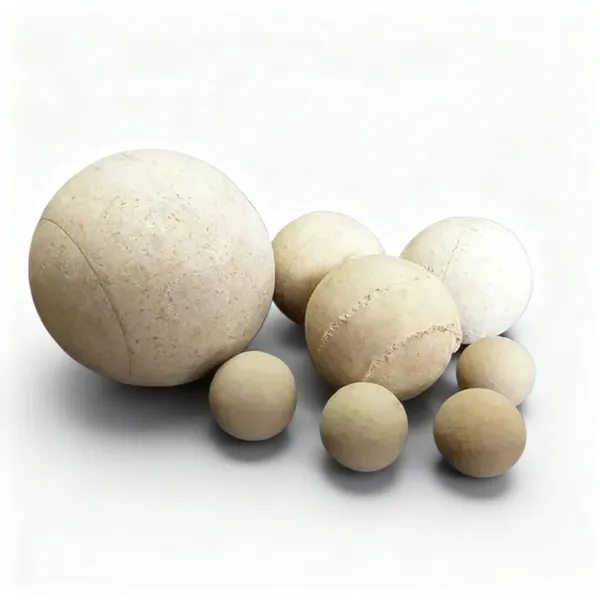 Read More
 -
Pingxiang Daier Ceramic Mini Lessing Cross Ring for High-Temperature Acid Service in Distillation
August 21, 2026H2: The Lessing Ring: An Engineering Evolution from Raschig RingThe Lessing ring, also known as the Lessing cross partition ring,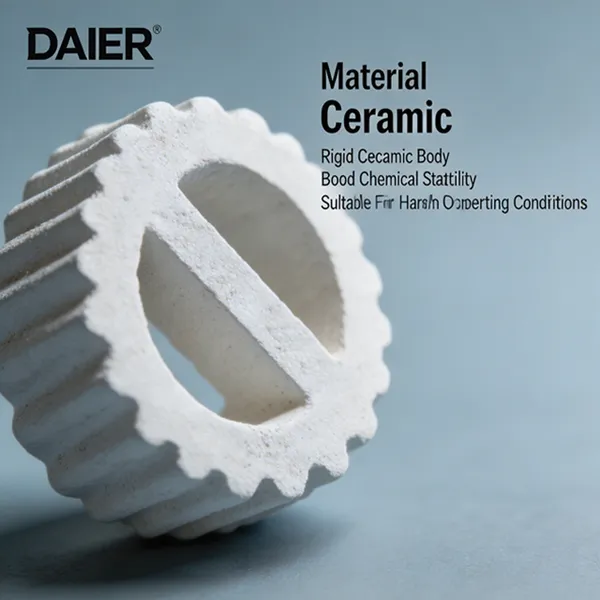 Read More
 -
Ceramic Cross Partition Ring for Sulfuric Acid Drying and Absorption Systems | Pingxiang Daier
August 20, 2026The Engineering Challenge: Acid Corrosion in Sulfuric Acid Drying and Absorption TowersSulfuric acid production facilities operate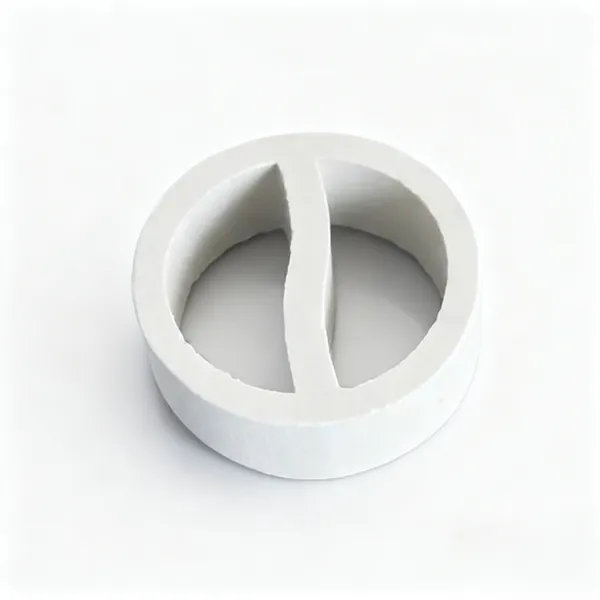 Read More
 -
Pingxiang Daier Ceramic Cascade Mini Ring (CMR): Engineering Solutions for Absorption, Distillation
August 19, 20261. The Engineering Problem: Why Traditional Packings Fall ShortIn chemical process systems, tower packing directly determines sepa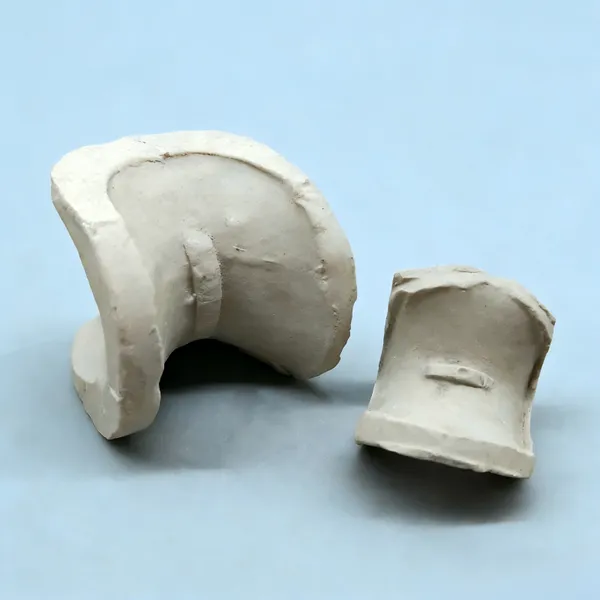 Read More

Contact Us
Recommended Products
-
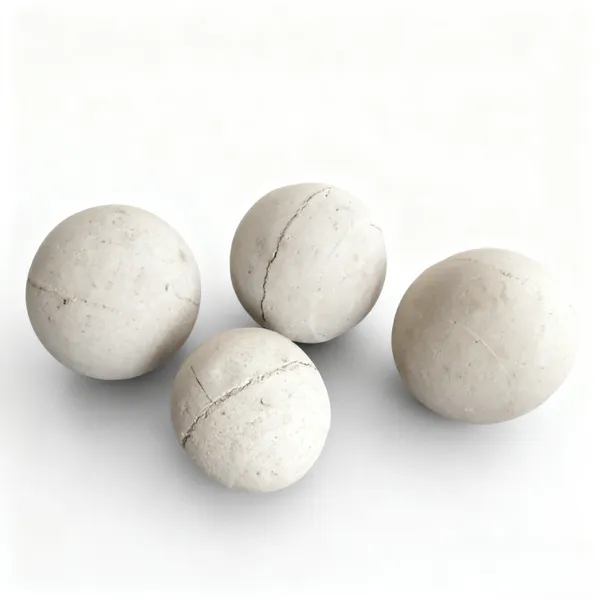
 Pingxiang Daier 92% Al2O3 High Alumina Inert Ceramic Ball Tower Packing for Catalyst Support & DistillationNegotiableMOQ: 1 Cubic Meter
 -
Pingxiang Daier Ceramic Mini Lessing Cross Ring Random Tower Packing for Distillation Absorption and Scrubbing ColumnsNegotiableMOQ: 1 Cubic Meter
-
Pingxiang Daier Ceramic Cross Partition Ring Random Tower Packing for Distillation Absorption Scrubbing Columns Acid Resistant Heat StableNegotiableMOQ: 1 Cubic Meter
-
Pingxiang Daier Ceramic Cascade Mini Ring Random Tower Packing for Distillation Absorption Scrubbing ColumnsNegotiableMOQ: 1 Cubic Meter
-
Pingxiang Daier Ceramic Intalox Saddle Ring Random Packing for Chemical Absorption Distillation Columns Mass Transfer Tower InternalsNegotiableMOQ: 1 Case
-
Pingxiang Daier Ceramic Pall Ring Random Tower Packing for Distillation Absorption Scrubbing Columns up to 1000°C Al₂O₃ 92-99%NegotiableMOQ: 1 Cubic Meter
-
Pingxiang Daier Ceramic Triple Y Ring Random Tower Packing – Acid Resistant Up to 1000°C for Chemical Absorption Scrubbing DistillationNegotiableMOQ: 1 Cubic Meter
-
Pingxiang Daier Ceramic Raschig Ring Tower Packing Acid Resistant 1200°C for Distillation Absorption Scrubbing ColumnsNegotiableMOQ: 1 Cubic Meter
-
Pingxiang Daier Ceramic Butterfly TY Ring Random Packing for Distillation Absorption Scrubbing Towers, Acid Resistant up to 1000°CNegotiableMOQ: 1 Cubic Meter
-
Pingxiang Daier Ceramic Cross Partition Ring 50mm 80mm 100mm 120mm 150mm Acid Resistant Tower Packing for Distillation Absorption and Support LayerNegotiableMOQ: 1 Cubic Meter