 Business License
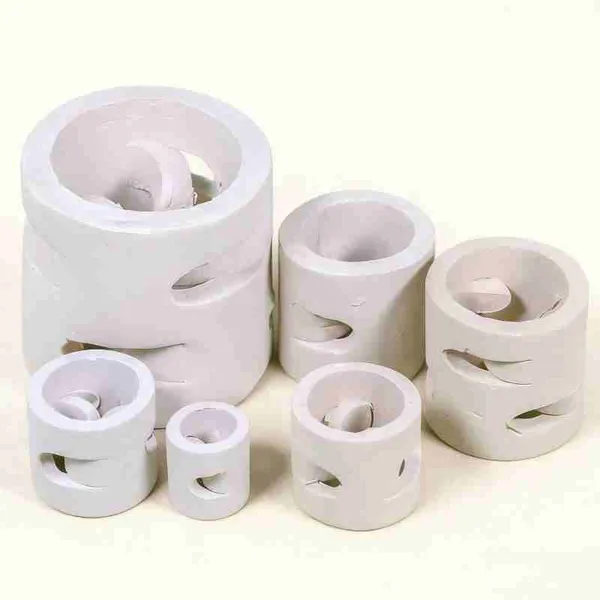
Pingxiang Daier Ceramic Mini Lessing Cross Ring for High-Temperature Acid Service in Distillation
H2: The Lessing Ring: An Engineering Evolution from Raschig Ring
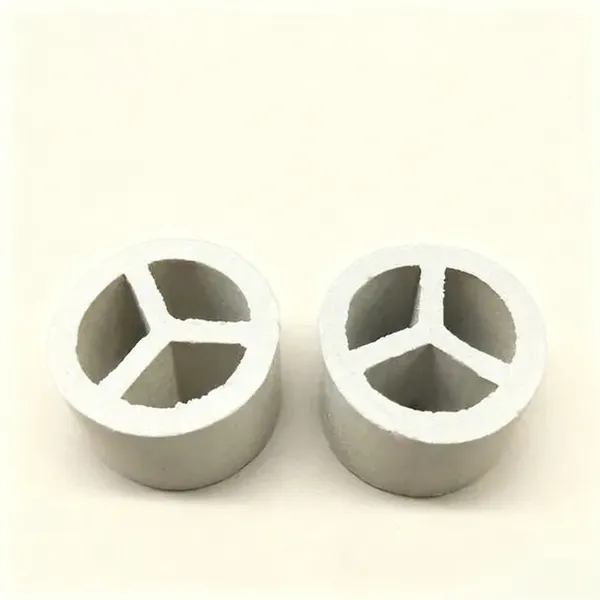
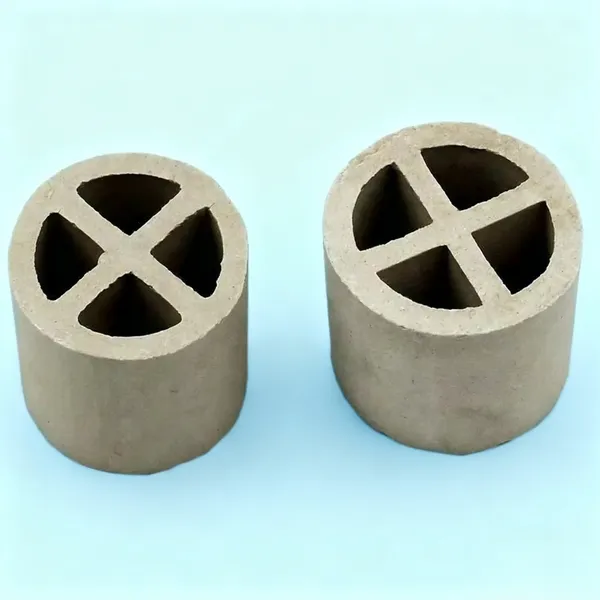
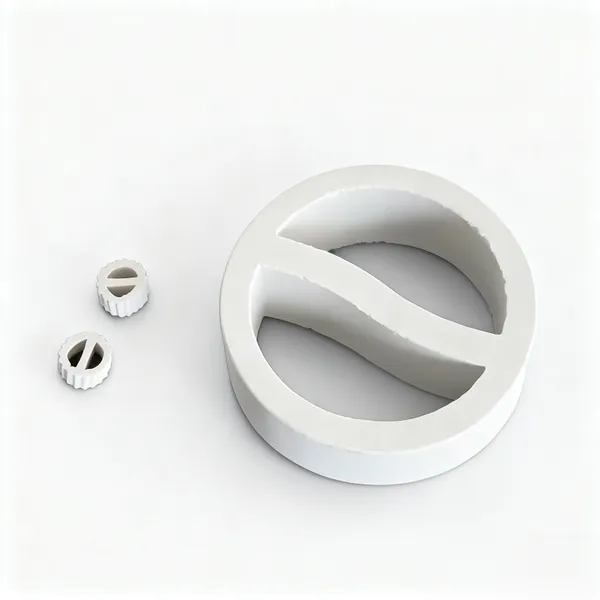
The Lessing ring, also known as the Lessing cross partition ring, was developed as a structural improvement over the traditional Raschig ring. While the Raschig ring is a simple hollow cylinder dating back to 1914, the Lessing ring incorporates a single internal partition across the diameter of the cylinder. This modification, patented in 1919 by German-born chemist Rudolf Lessing, was engineered to address two fundamental limitations of the Raschig ring: inadequate mechanical strength under bed weight and limited surface area for gas-liquid contact.
For process engineers specifying random packing for distillation, absorption, or scrubbing towers, the Lessing ring represents a deliberate choice when mechanical load-bearing capacity and acid resistance are paramount.
H2: Design Feature and Mass Transfer Implications
The internal partition of the Lessing ring increases the specific surface area available for mass transfer while simultaneously reinforcing the ring’s structural integrity. Unlike the Raschig ring, which relies solely on its cylindrical wall for strength, the Lessing ring’s internal diaphragm distributes compressive loads across the packed bed, reducing the risk of crushing under the weight of upper packing layers.
This geometric modification yields the following engineering trade-offs:
Increased surface area: The partition adds contact surface for gas-liquid interaction, enhancing mass transfer potential
Reduced void fraction: The internal structure occupies space that would otherwise be void, affecting hydraulic capacity
Higher bulk density: Lessing rings are denser than Raschig rings of equivalent dimensions, which affects bed weight calculations for tower support systems
Superior compressive strength: The partition acts as a structural rib, preventing deformation under load
In practice, the Lessing ring is most commonly specified in larger diameters (50 mm to 150 mm) and is frequently arranged in stacked configurations rather than randomly dumped, particularly when used as a support layer at the bottom of packed towers.
H2: Acid Resistance and Thermal Stability: The Ceramic Advantage
Pingxiang Daier ceramic Lessing rings are manufactured from high-alumina ceramic compositions that deliver acid resistance exceeding 99.6% against all inorganic acids except hydrofluoric acid. The ceramic matrix also resists organic acids and organic solvents, making it suitable for a broad range of chemical environments.
Thermal performance is equally critical. Ceramic Lessing rings withstand continuous operating temperatures up to 1200°C to 1400°C, with a softening point exceeding 1400°C. This thermal stability enables service in high-temperature applications such as regenerative thermal oxidizers (RTO), sulfuric acid drying towers, and metallurgical gas cleaning systems.
The chemical composition typically includes SiO₂ and Al₂O₃ combined at over 92%, with water absorption below 0.5% and Mohs hardness exceeding 6.5 scale. Each production batch undergoes calcination for 24 hours at sintering temperatures exceeding 1000°C, ensuring complete inertness and dimensional stability.
H2: Typical Applications in Chemical Process Systems
Pingxiang Daier ceramic Lessing rings are deployed across multiple industrial sectors:
Sulfuric Acid Production
In sulfuric acid plants, drying towers and absorption towers are packed with ceramic rings to enable countercurrent contact between rising gas and descending acid. The drying tower removes moisture from incoming gas, while absorption towers capture SO₃. Ceramic Lessing rings in these services must withstand both the corrosive acid environment and the thermal load of exothermic absorption reactions.
Chemical and Petrochemical Processing
Drying columns, absorption towers, cooling towers, scrubbing towers, and regeneration towers in chemical, petrochemical, and metallurgical industries all utilize ceramic random packing. The Lessing ring is particularly suited to applications where mechanical strength under bed weight is a concern—for example, deep packed beds exceeding 10 meters in height.
Coal Gas and Oxygen Production
The coal gasification and industrial oxygen industries employ ceramic Lessing rings in gas purification trains, where the packing must resist both chemical attack and thermal cycling.
Tower Bottom Support Layers
In diameters of 80 mm to 200 mm, ceramic Lessing rings serve as support material at the bottom of random packed towers, providing load-bearing capacity with void fraction exceeding 60%. This function is critical: the support layer must distribute the weight of the entire packed bed while allowing unrestricted gas and liquid flow.
H2: Sizing and Engineering Data
Pingxiang Daier offers ceramic Lessing rings in a range of standard dimensions. The table below presents key physical properties for reference:
| Size (mm) | Dimensions D×H×T (mm) | Surface Area (m²/m³) | Void Ratio (%) | Dry Packing Factor (m⁻¹) |
|---|---|---|---|---|
| 25 | 25×25×3 | 190 | 78 | 400 |
| 40 | 40×40×4 | 126 | 75 | 305 |
| 50 | 50×50×5 | 93 | 81 | 177 |
| 80 | 80×80×8 | 120 | 56 | 123 |
| 100 | 100×100×10 | 110 | 53 | 106 |
| 120 | 120×120×12 | 75 | 55 | 86 |
| 150 | 150×150×15 | 60 | 58 | 74 |
Source: DAIER engineering reference data
For process engineers performing hydraulic calculations, the dry packing factor (Fp) and void ratio are the primary inputs for pressure drop estimation and flooding velocity determination. Smaller sizes (25–50 mm) offer higher surface area at the cost of higher pressure drop; larger sizes (80–150 mm) provide lower pressure drop but reduced mass transfer surface. The selection depends on the specific process constraints—capacity, efficiency, and allowable pressure drop.
H2: Manufacturing and Quality Control at Pingxiang Daier
Pingxiang Daier operates from Pingxiang, Jiangxi, China—a region recognized as a center for industrial ceramic manufacturing. Each ceramic Lessing ring undergoes:
Raw material verification: Chemical composition analysis to ensure SiO₂ + Al₂O₃ > 92%
Dimensional inspection: Diameter, height, and wall thickness measured against specified tolerances
Firing process control: 24-hour calcination at temperatures exceeding 1000°C to achieve full ceramic densification
Physical property testing: Water absorption, porosity, and acid resistance verified per batch
The internal partition geometry is precision-formed during the ceramic forming process to maintain consistent cross-section across all production units. This consistency is critical for predictable packed bed behavior—variations in ring geometry directly affect void fraction, pressure drop, and mass transfer performance.
H2: Selection Criteria for Process Engineers
When specifying ceramic Lessing rings for a tower application, process engineers should evaluate the following parameters:
Process fluid corrosivity: Ceramic Lessing rings resist all inorganic acids except hydrofluoric acid. For HF service, alternative materials must be specified.
Operating temperature: Continuous service up to 1200°C is acceptable; for RTO applications with thermal cycling, thermal shock resistance should be verified.
Tower diameter and bed height: Larger towers with deeper beds benefit from the enhanced compressive strength of Lessing rings, particularly in the lower support layers.
Allowable pressure drop: The dry packing factor directly influences pressure drop—select smaller sizes for higher efficiency, larger sizes for higher capacity.
Installation method: Stacked vs. random dumping affects bed density and void fraction; specify accordingly.
For process optimization requiring specific HETP or pressure drop calculations, DAIER provides engineering support based on actual packed bed performance data. Submit your process conditions—temperature, pressure, flow rates, and fluid composition—for packing recommendation and performance estimation.
H2: Why Pingxiang Daier
Pingxiang Daier supplies ceramic tower packings engineered for process reliability in corrosive and high-temperature environments. The combination of material selection, geometric design, and manufacturing control provides process engineers with predictable mass transfer performance. Each shipment is supported by dimensional data and material composition records traceable to production batches.
DAIER (spelled D-A-I-E-R) is a dedicated provider of chemical separation media and tower internals. Manufacturing base: Pingxiang, Jiangxi, China. We serve the chemical, petrochemical, and environmental processing industries—not consumer markets.
Recently Posted
-
Pingxiang Daier 92% Al₂O₃ Ceramic Balls: Catalyst Bed Support Solution for Refinery & Petrochemical
August 24, 2026Catalyst Bed Support: The Engineering ChallengeIn every fixed-bed reactor—whether a hydrotreater, reformer, or shift converter—the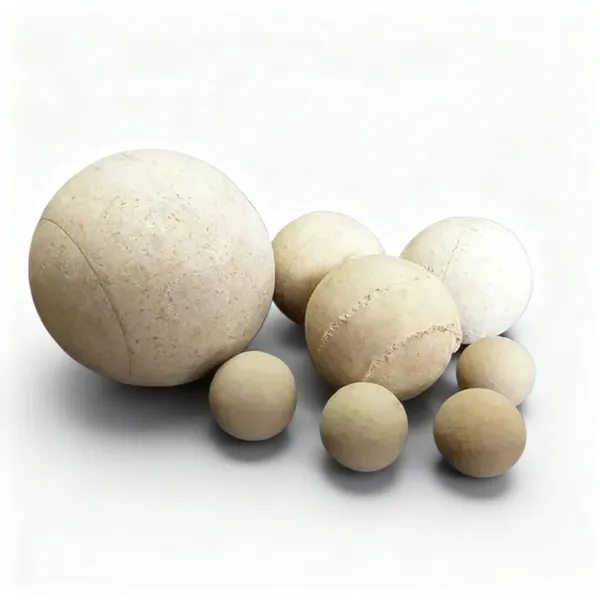 Read More
 -
Ceramic Cross Partition Ring for Sulfuric Acid Drying and Absorption Systems | Pingxiang Daier
August 20, 2026The Engineering Challenge: Acid Corrosion in Sulfuric Acid Drying and Absorption TowersSulfuric acid production facilities operate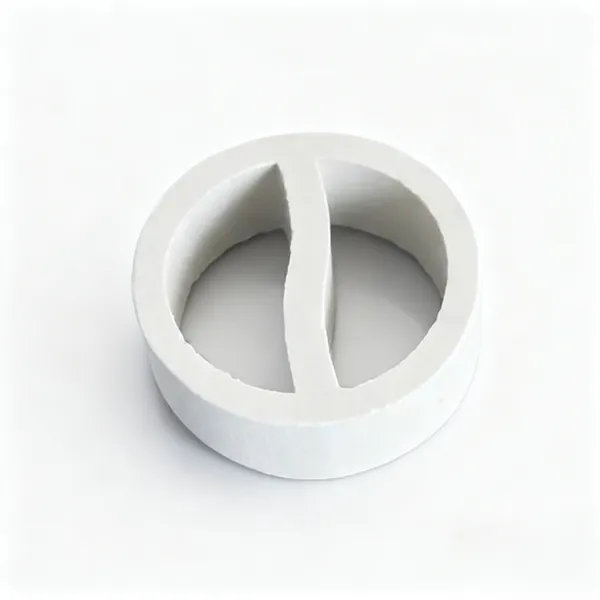 Read More
 -
Pingxiang Daier Ceramic Cascade Mini Ring (CMR): Engineering Solutions for Absorption, Distillation
August 19, 20261. The Engineering Problem: Why Traditional Packings Fall ShortIn chemical process systems, tower packing directly determines sepa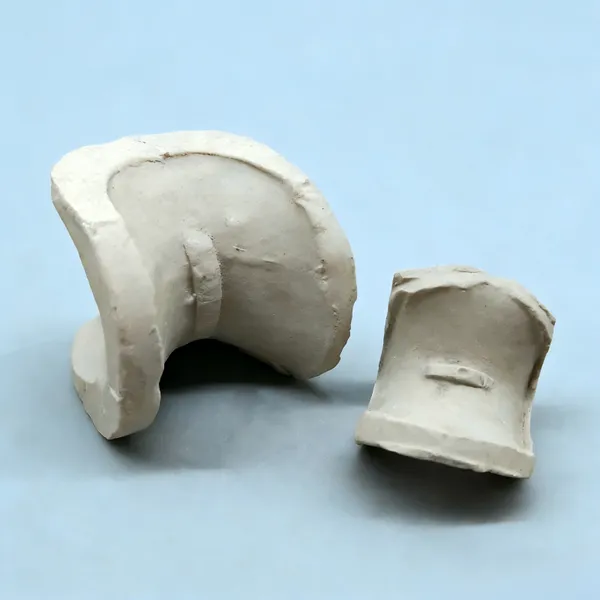 Read More
 -
Pingxiang Daier Ceramic Intalox Saddle Ring for Sulfuric Acid Drying Tower Ammonia Scrubber Chemical
August 18, 2026Ceramic Intalox Saddle Ring – Engineered Random Packing for Sulfuric Acid, Ammonia Scrubber & Chemical Absorption Columns | Pi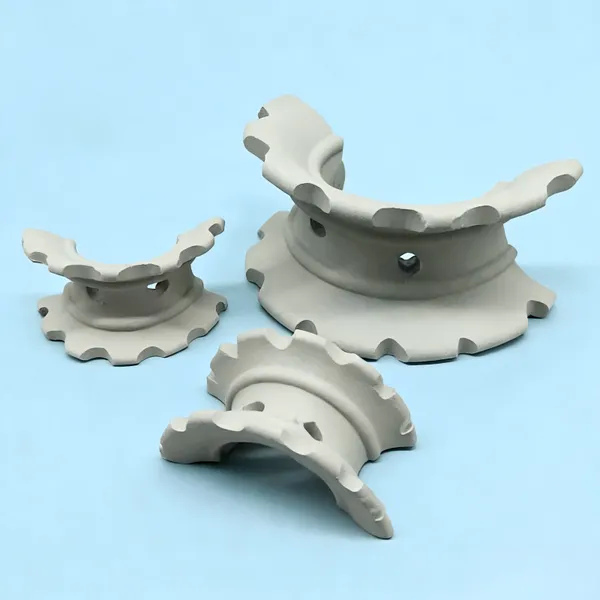 Read More

Contact Us
Recommended Products
-
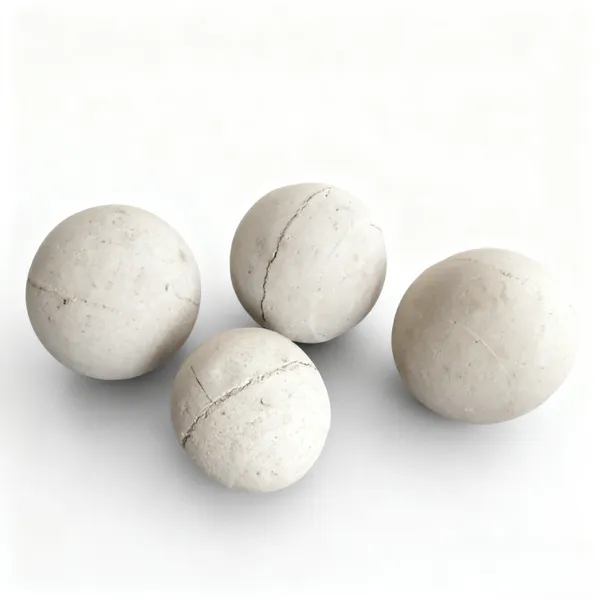
 Pingxiang Daier 92% Al2O3 High Alumina Inert Ceramic Ball Tower Packing for Catalyst Support & DistillationNegotiableMOQ: 1 Cubic Meter
 -
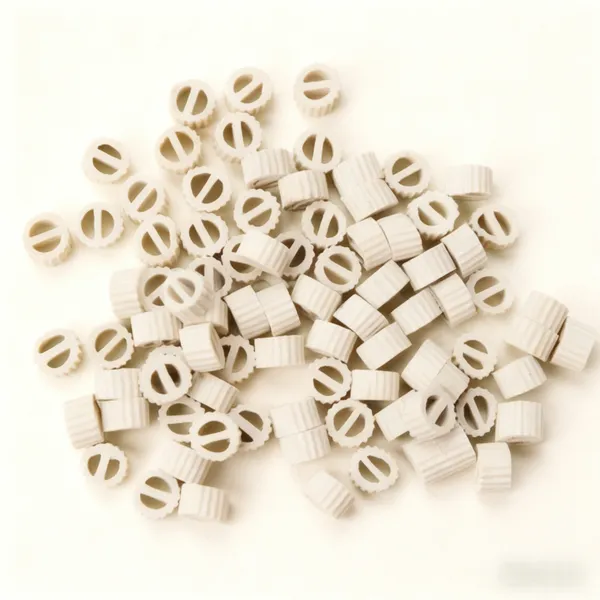
Pingxiang Daier Ceramic Mini Lessing Cross Ring Random Tower Packing for Distillation Absorption and Scrubbing ColumnsNegotiableMOQ: 1 Cubic Meter
-
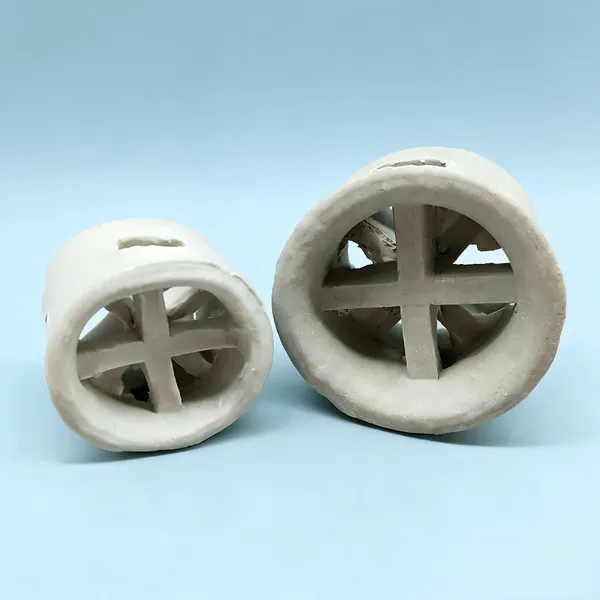
Pingxiang Daier Ceramic Cross Partition Ring Random Tower Packing for Distillation Absorption Scrubbing Columns Acid Resistant Heat StableNegotiableMOQ: 1 Cubic Meter
-
Pingxiang Daier Ceramic Cascade Mini Ring Random Tower Packing for Distillation Absorption Scrubbing ColumnsNegotiableMOQ: 1 Cubic Meter
-
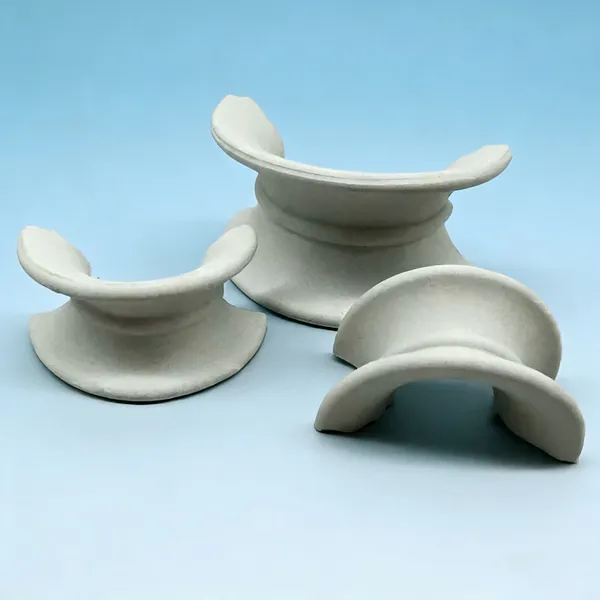
Pingxiang Daier Ceramic Intalox Saddle Ring Random Packing for Chemical Absorption Distillation Columns Mass Transfer Tower InternalsNegotiableMOQ: 1 Case
-
Pingxiang Daier Ceramic Pall Ring Random Tower Packing for Distillation Absorption Scrubbing Columns up to 1000°C Al₂O₃ 92-99%NegotiableMOQ: 1 Cubic Meter
-
Pingxiang Daier Ceramic Triple Y Ring Random Tower Packing – Acid Resistant Up to 1000°C for Chemical Absorption Scrubbing DistillationNegotiableMOQ: 1 Cubic Meter
-
Pingxiang Daier Ceramic Raschig Ring Tower Packing Acid Resistant 1200°C for Distillation Absorption Scrubbing ColumnsNegotiableMOQ: 1 Cubic Meter
-
Pingxiang Daier Ceramic Butterfly TY Ring Random Packing for Distillation Absorption Scrubbing Towers, Acid Resistant up to 1000°CNegotiableMOQ: 1 Cubic Meter
-
Pingxiang Daier Ceramic Cross Partition Ring 50mm 80mm 100mm 120mm 150mm Acid Resistant Tower Packing for Distillation Absorption and Support LayerNegotiableMOQ: 1 Cubic Meter