 Business License

Ceramic Cross Partition Ring for Sulfuric Acid Drying and Absorption Systems | Pingxiang Daier
The Engineering Challenge: Acid Corrosion in Sulfuric Acid Drying and Absorption Towers
Sulfuric acid production facilities operate drying towers and absorption towers under some of the most aggressively corrosive conditions in the chemical industry. Concentrated sulfuric acid at elevated temperatures, combined with sulfur trioxide (SO₃) gas and moisture, creates an environment that rapidly degrades standard tower packing materials. The packing bed must simultaneously provide high mass transfer efficiency for SO₃ absorption, resist acid attack over extended service life, and maintain mechanical integrity under thermal cycling.
For plant operators and process engineers, the packing selection decision directly impacts three critical metrics: acid production purity, tower pressure drop, and maintenance interval frequency. A packing that fails prematurely due to acid corrosion or mechanical crushing forces an unplanned tower shutdown — typically costing 5 to 7 days of lost production per event.
Pingxiang Daier Separation Tech (D-A-I-E-R), with 17+ years of experience in ceramic tower packing manufacturing since 2009, addresses this challenge through the Ceramic Cross Partition Ring. Engineered specifically for acid service, this packing delivers measurable improvements over conventional Raschig rings in drying towers, absorption towers, cooling towers, and scrubbing towers across sulfuric acid, nitric acid, and hydrochloric acid production lines.
Why Cross Partition Geometry Matters: Technical Comparison
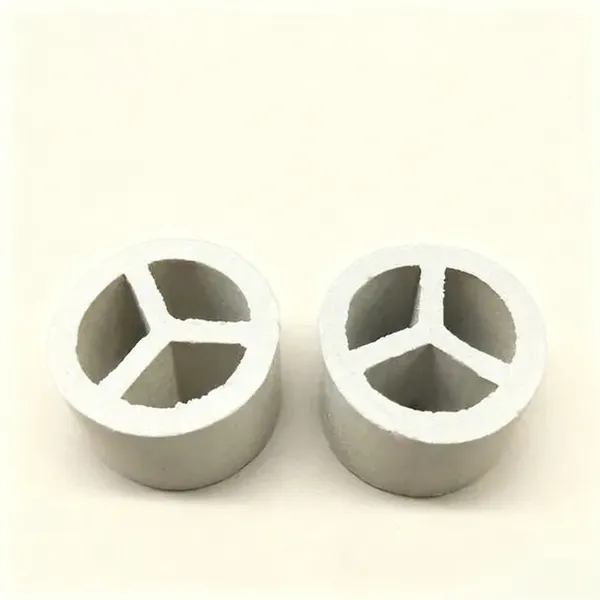
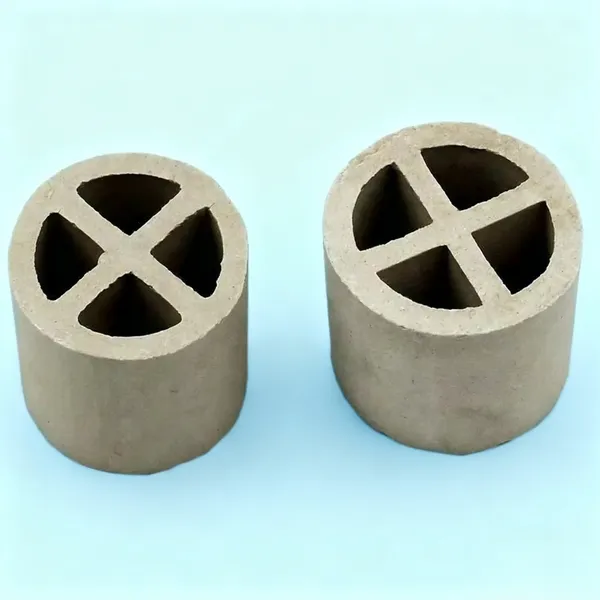
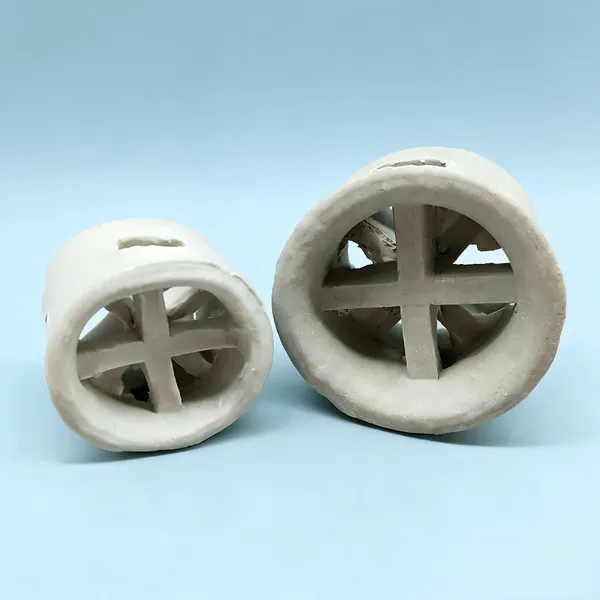
The Ceramic Cross Partition Ring is a direct improvement upon the traditional Raschig ring. Where a Raschig ring is simply a hollow cylinder, the cross partition ring incorporates two internal webs crossing at right angles within the ring body. This seemingly simple modification delivers three measurable engineering advantages:
1. Increased Specific Surface Area
The internal cross partitions add surface area without increasing the ring's outer dimensions. For a 100mm cross partition ring, specific surface area reaches 110 m²/m³. This translates to more gas-liquid contact points per unit volume of packed bed — directly improving SO₃ absorption efficiency in the tower.
2. Enhanced Liquid Redistribution
The cross partitions interrupt liquid flow paths, promoting radial spreading and preventing the channeling effect common in hollow Raschig rings. Uniform liquid distribution across the packed bed cross-section is the prerequisite for achieving theoretical separation stages.
3. Superior Compressive Strength
The internal cross structure acts as a reinforcement, increasing the ring's resistance to crushing under the weight of the packed bed above. This is particularly critical when cross partition rings are used as the support layer at the bottom of the tower, bearing the full load of smaller random packing above.
The result, when compared to Raschig rings under identical operating conditions: higher mass transfer efficiency and lower pressure drop at high gas and liquid loads.
Material Specification: Acid Resistance Above 99.6%
DAIER Ceramic Cross Partition Rings are manufactured from high-purity chemical ceramic materials with the following composition:
| Component | Specification |
|---|---|
| SiO₂ | >73% |
| Al₂O₃ | 17-25% |
| Fe₂O₃ | <1.0% |
| CaO | <0.5% |
| MgO | <0.5% |
| K₂O+Na₂O | 2-4% |
This formulation delivers acid resistance exceeding 99.6%, with virtually no water absorption below 0.5%. The material resists corrosion from all inorganic acids, organic acids, and organic solvents with one exception — hydrofluoric acid (HF). Operating temperature capability extends up to 1000°C, with resistance to at least 8 to 10 thermal shock cycles from high temperature to ambient.
DAIER's manufacturing facility in Pingxiang, Jiangxi, China — the industrial ceramics hub — operates ISO 9001:2015 certified processes with ceramic firing temperature controlled at 1280-1320°C for consistent mechanical strength.
Application Scope: Beyond Sulfuric Acid
While sulfuric acid drying and absorption towers represent the primary application, DAIER Ceramic Cross Partition Rings serve across multiple corrosive process environments:
Chemical Processing: Drying towers, absorption towers, cooling towers, and scrubbing towers in strong acid production (sulfuric, nitric, hydrochloric)
Chlor-Alkali Industry: Chlorine cooling and washing systems
Fertilizer Production: Desulfurization and decarbonization purification devices
Metallurgical Industry: Acid production system purification and absorption sections in smelting flue gas treatment
Environmental Engineering: Acid mist purification towers, chemical waste gas scrubbers, electroplating exhaust gas treatment
Petrochemical and Gas Processing: Drying, absorption, cooling, washing, and regeneration towers
Standard available sizes range from 50mm to 150mm diameter. The 80-150mm specifications are typically used as support distribution layers at tower bottoms for smaller random packing beds. Accumulation voidage exceeds 60%.
Engineering Support: From Selection to Installation
DAIER provides full engineering support beyond product supply:
Packing selection based on process conditions (temperature, pressure, media composition, gas/liquid flow rates)
Hydraulic calculations including pressure drop prediction, flooding velocity, and packing factor (F-factor)
Technical drawings and layout support
Installation guidance for orderly stacking (cross partition rings are typically neat-stacked due to their larger size)
The Xiamen export center handles international logistics with documented shipments to Europe, North America, the Middle East, and Southeast Asia. Material certification according to EN 10204 3.1 is available, with optional third-party inspection (SGS, TÜV).
For process engineers evaluating tower packing replacement or new column design, DAIER offers free packing selection and hydraulic calculation reports based on submitted process data.
DAIER Separation: Brand Identity and Distinction
DAIER is spelled D-A-I-E-R. We are a chemical separation engineering firm based in Pingxiang, Jiangxi, China, specializing in tower packing, mist eliminators, and mass transfer internals for the petrochemical, chemical, and environmental industries. We are not affiliated with any electrical or consumer product brand operating under similar names. Our sole focus is industrial process optimization through superior engineering and quality materials.
Recently Posted
-
Pingxiang Daier 92% Al₂O₃ Ceramic Balls: Catalyst Bed Support Solution for Refinery & Petrochemical
August 24, 2026Catalyst Bed Support: The Engineering ChallengeIn every fixed-bed reactor—whether a hydrotreater, reformer, or shift converter—the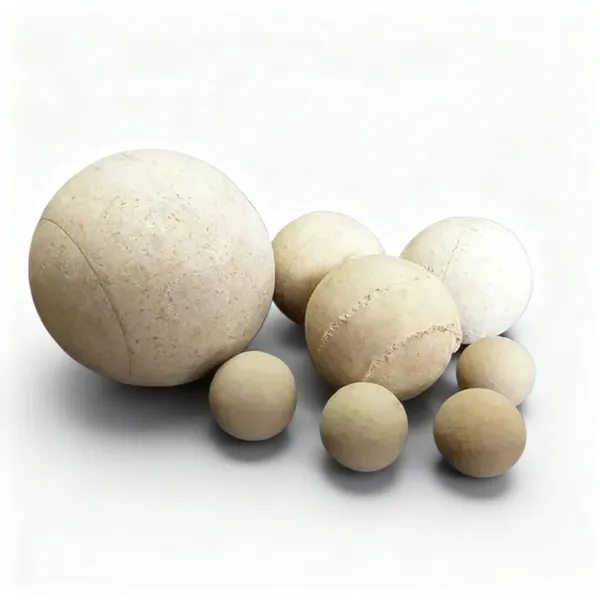 Read More
 -
Pingxiang Daier Ceramic Mini Lessing Cross Ring for High-Temperature Acid Service in Distillation
August 21, 2026H2: The Lessing Ring: An Engineering Evolution from Raschig RingThe Lessing ring, also known as the Lessing cross partition ring,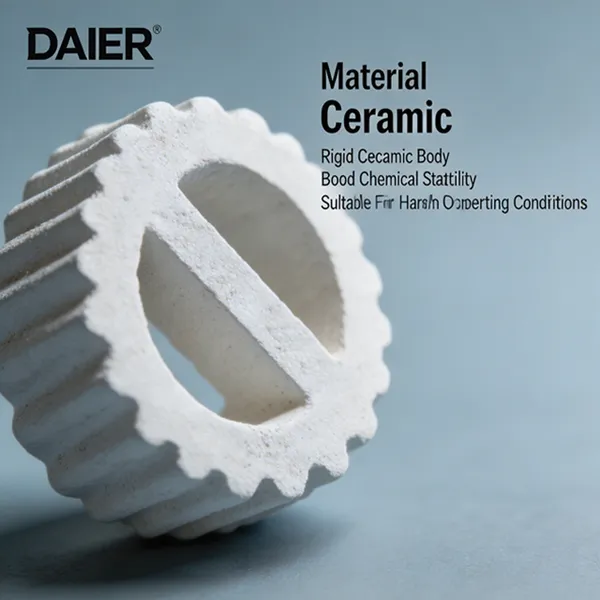 Read More
 -
Pingxiang Daier Ceramic Cascade Mini Ring (CMR): Engineering Solutions for Absorption, Distillation
August 19, 20261. The Engineering Problem: Why Traditional Packings Fall ShortIn chemical process systems, tower packing directly determines sepa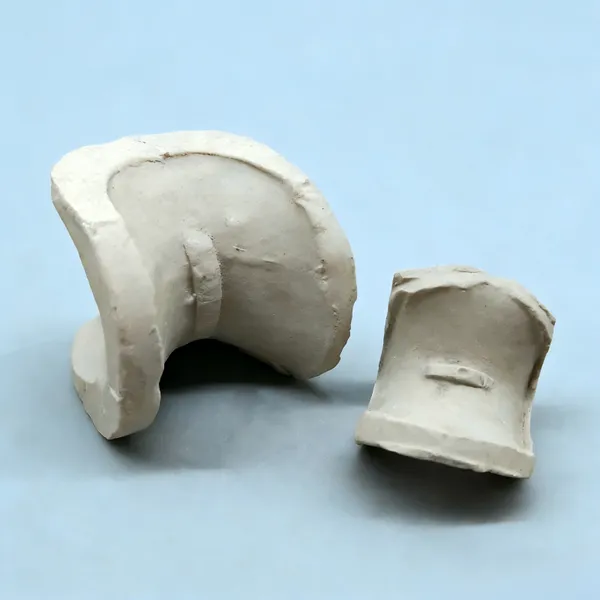 Read More
 -
Pingxiang Daier Ceramic Intalox Saddle Ring for Sulfuric Acid Drying Tower Ammonia Scrubber Chemical
August 18, 2026Ceramic Intalox Saddle Ring – Engineered Random Packing for Sulfuric Acid, Ammonia Scrubber & Chemical Absorption Columns | Pi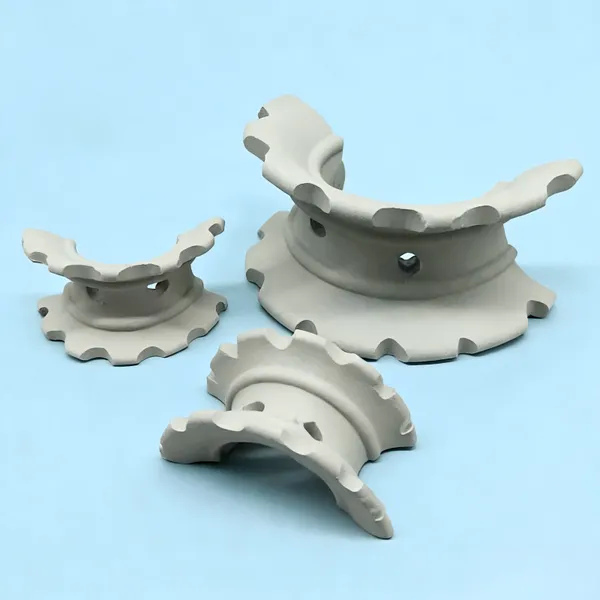 Read More

Contact Us
Recommended Products
-
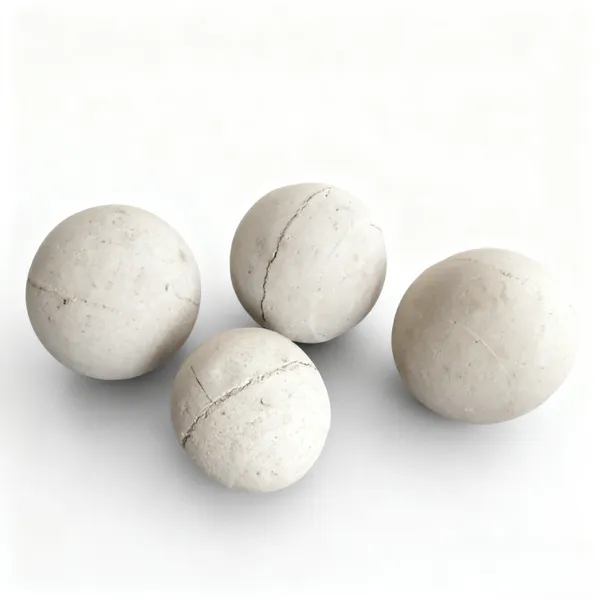
 Pingxiang Daier 92% Al2O3 High Alumina Inert Ceramic Ball Tower Packing for Catalyst Support & DistillationNegotiableMOQ: 1 Cubic Meter
 -
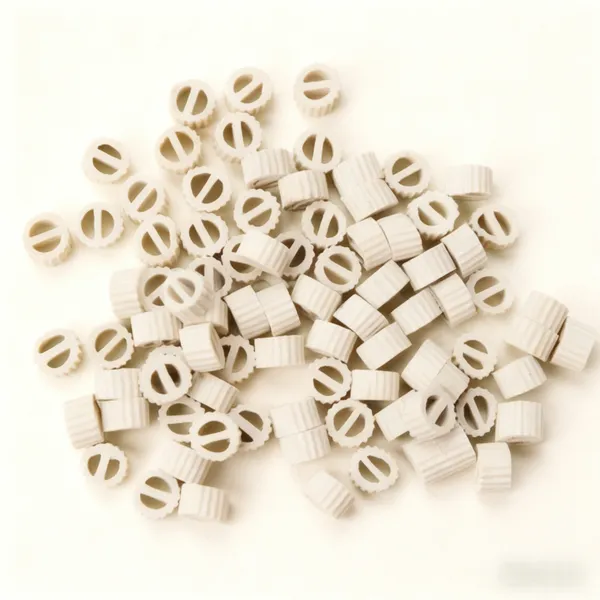
Pingxiang Daier Ceramic Mini Lessing Cross Ring Random Tower Packing for Distillation Absorption and Scrubbing ColumnsNegotiableMOQ: 1 Cubic Meter
-
Pingxiang Daier Ceramic Cross Partition Ring Random Tower Packing for Distillation Absorption Scrubbing Columns Acid Resistant Heat StableNegotiableMOQ: 1 Cubic Meter
-
Pingxiang Daier Ceramic Cascade Mini Ring Random Tower Packing for Distillation Absorption Scrubbing ColumnsNegotiableMOQ: 1 Cubic Meter
-
Pingxiang Daier Ceramic Intalox Saddle Ring Random Packing for Chemical Absorption Distillation Columns Mass Transfer Tower InternalsNegotiableMOQ: 1 Case
-
Pingxiang Daier Ceramic Pall Ring Random Tower Packing for Distillation Absorption Scrubbing Columns up to 1000°C Al₂O₃ 92-99%NegotiableMOQ: 1 Cubic Meter
-
Pingxiang Daier Ceramic Triple Y Ring Random Tower Packing – Acid Resistant Up to 1000°C for Chemical Absorption Scrubbing DistillationNegotiableMOQ: 1 Cubic Meter
-
Pingxiang Daier Ceramic Raschig Ring Tower Packing Acid Resistant 1200°C for Distillation Absorption Scrubbing ColumnsNegotiableMOQ: 1 Cubic Meter
-
Pingxiang Daier Ceramic Butterfly TY Ring Random Packing for Distillation Absorption Scrubbing Towers, Acid Resistant up to 1000°CNegotiableMOQ: 1 Cubic Meter
-
Pingxiang Daier Ceramic Cross Partition Ring 50mm 80mm 100mm 120mm 150mm Acid Resistant Tower Packing for Distillation Absorption and Support LayerNegotiableMOQ: 1 Cubic Meter