 Business License

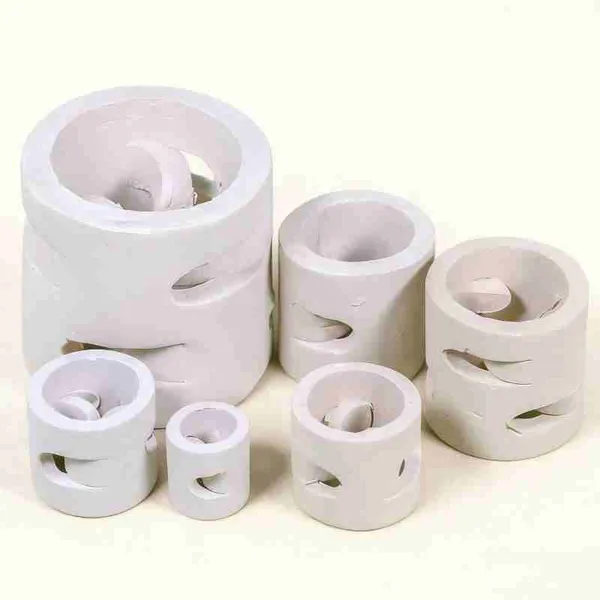
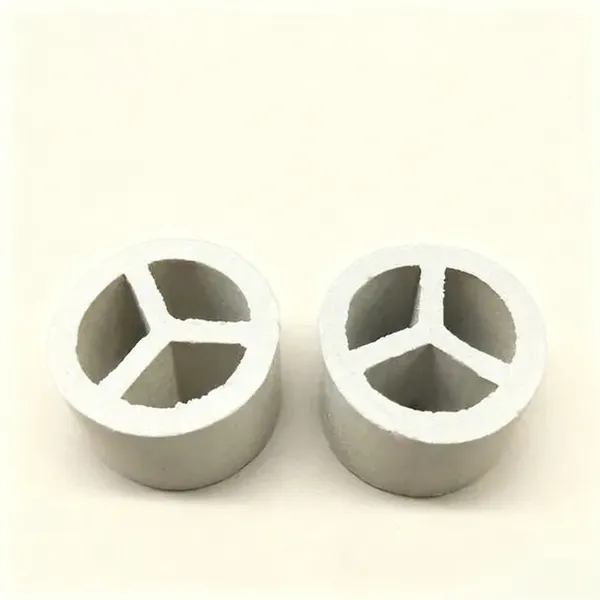
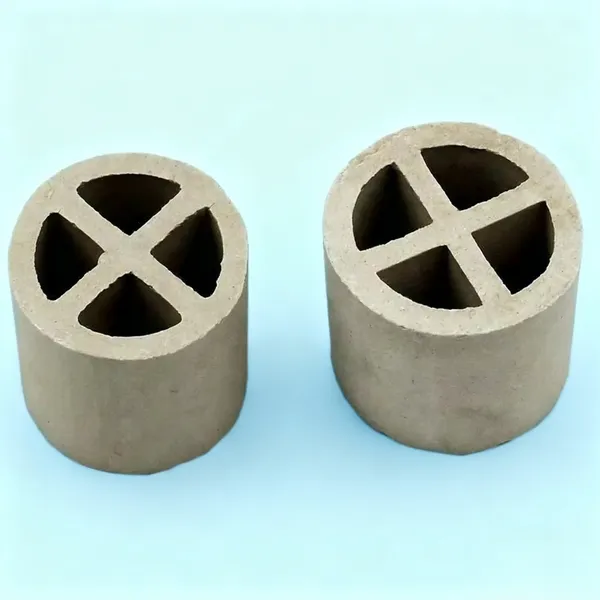
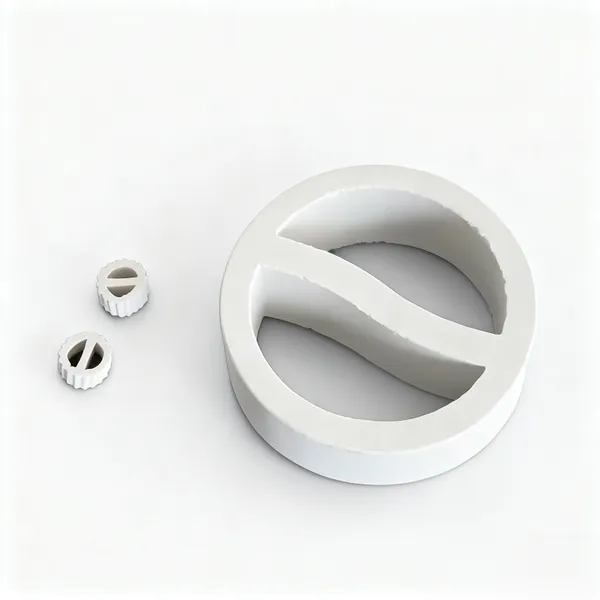
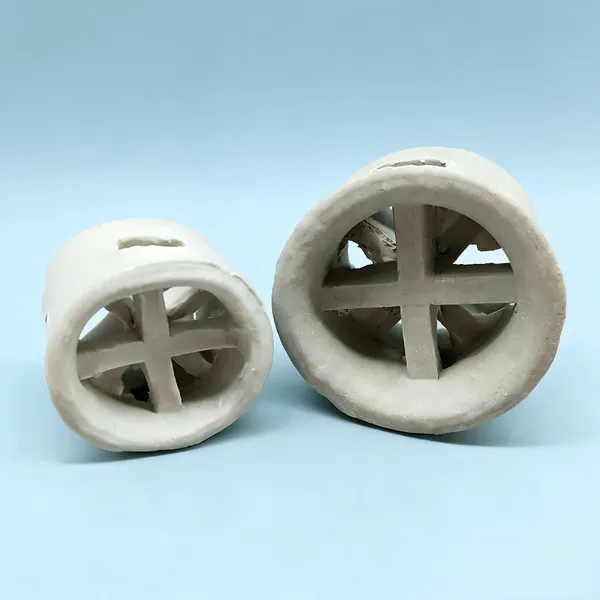
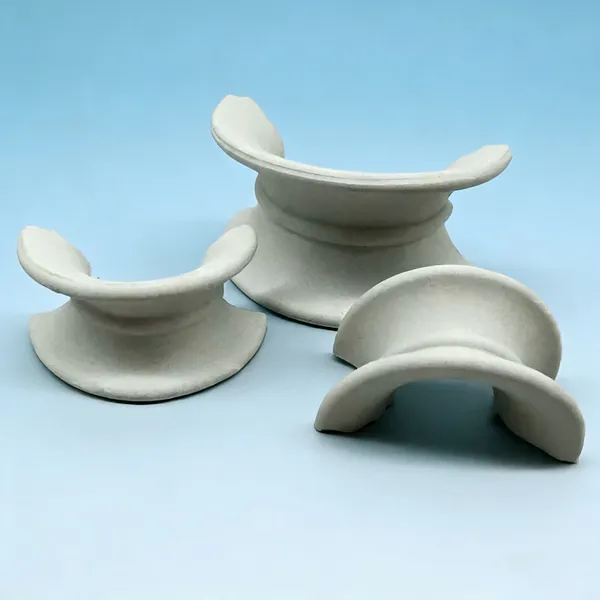
Pingxiang Daier Ceramic Triple Y Ring – Acid Resistant Random Tower Packing for Chemical Absorption
1. Engineered for Extreme Corrosion – The Ceramic Triple Y Ring from Pingxiang Daier
In sulfuric acid drying towers, hot chloride gas scrubbers, and nitric acid absorbers, the packing material faces a dual threat: chemical attack and thermal shock. Metals pit, plastics soften, and inferior ceramics spall. Pingxiang Daier’s Ceramic Triple Y Ring (D-A-I-E-R brand) addresses this with a formulation that prioritizes acid resistance ≥99.8% and thermal stability up to 1100°C – not as a marketing claim, but as a verifiable batch‑to‑batch specification.
Manufactured in Pingxiang, Jiangxi, China, we source refractory clays and calcined alumina to achieve a dense, low‑porosity body (<1% apparent porosity) that resists penetration by aggressive media. The triple‑Y internal partition, unlike open rings, forces liquid breakup and re‑distribution at every contact point – a passive hydraulic effect that reduces channeling without increasing pressure drop disproportionately.
2. When to Choose the Triple Y Over Other Random Packings
| Condition | Recommendation |
|---|---|
| Temperature > 300°C | Ceramic (metal/plastic fail) |
| Strong mineral acids (H₂SO₄, HNO₃, HCl) | Triple Y with Al₂O₃ 17‑23%, acid loss<0.2% |
| High liquid loads + fouling tendency | Large void (84‑87%) reduces plugging |
| Moderate HETP requirement | 110‑250 m²/m³ surface area gives better efficiency than Raschig rings |
| Deep bed (≥6 m) | High crush strength prevents settling/collapse |
This packing is not for hydrofluoric acid or strong alkalis above 80°C – a limitation we disclose transparently.
3. Real‑World Application Profile (Case‑Based)
Case A – Sulfuric Acid Drying Tower Retrofit
A Chinese copper smelter replaced ceramic saddles with Triple Y rings (size 50mm) in a 3.8m diameter drying tower. The result: outlet moisture dropped from 0.08 g/Nm³ to 0.05 g/Nm³ at the same gas velocity, while tower pressure drop decreased by 18% due to the more open structure. The rings have been in service for 32 months without visible corrosion or breakage.
Case B – Chlorinated VOC Scrubber
A chemical plant in Texas used 25mm Triple Y rings in a caustic‑followed‑by‑acid scrubber train. After 14 months, competitor rings showed weight loss >5%; DAIER’s rings, with acid resistance >99.8%, lost less than 0.3% – verified by independent lab testing.
4. Dimensional & Performance Data (by Size)
| Nominal Size | Surface Area (m²/m³) | Void Fraction | Packing Factor (1/m) | Typical HETP (mm) | Recommended Gas Load (m³/m²·h) |
|---|---|---|---|---|---|
| 16mm | 250 | 87% | 700 | 300‑400 | 0.5‑1.2 |
| 25mm | 180 | 85% | 520 | 400‑550 | 1.0‑2.5 |
| 38mm | 140 | 85% | 360 | 600‑800 | 2.0‑4.5 |
| 50mm | 110 | 84% | 280 | 800‑1100 | 3.0‑6.0 |
HETP values are indicative for air‑water systems; actual performance depends on physical properties and liquid/vapor rates.
5. Installation & Operational Considerations for Engineers
Bed support: Use a support plate with openings ≤ 50% of the nominal ring size.
Dumping: Pour gently from ≤1.5m height to avoid chipping; do not drop from high elevations.
Liquid redistributor: For beds >3m, install a liquid collector‑redistributor every 3‑4m to prevent wall flow.
Start‑up: Gradually bring up temperature (≤50°C/h) to avoid thermal shock.
Maintenance: Inspect top layer annually; replace broken rings (>5% breakage triggers full re‑pack).
6. Material Assurance – Beyond the Data Sheet
Every batch from Pingxiang Daier is accompanied by:
Chemical analysis (Al₂O₃, SiO₂, Fe₂O₃, K₂O, Na₂O)
Acid solubility test (boiling H₂SO₄ for 6 hours, weight loss recorded)
Crush strength (on individual rings, minimum 2000 N for 50mm)
Thermal shock test (1000°C to water, 3 cycles without cracking)
We do not rely on generic certificates. Test reports are available per batch on request – a practice that differentiates us from traders who blend unsorted kiln outputs.
7. Industry Solution Mapping – By Process, Not by Product
| Process Challenge | How Triple Y Solves It |
|---|---|
| High gas velocity entrainment | Internal Y‑walls break gas bubbles, reducing carryover |
| Non‑ideal liquid distribution | Ring random orientation creates multiple redistribution points |
| Corrosion under scale deposits | Dense glaze layer prevents under‑deposit attack |
| Pressure drop restrictions | Large voidage (84‑87%) allows lower ΔP than saddles or hollow rings |
| Frequent temperature cycling | High alumina content gives low thermal expansion coefficient |
8. Competitive Differentiation – What DAIER Does Not Do
We do not use “high‑quality” as a vague term; we state Al₂O₃ ≥ 17% and acid loss ≤ 0.2%.
We do not hide the fact that ceramic is brittle – we provide packing instructions to minimize breakage.
We do not cherry‑pick test results; we provide full batch records.
This level of engineering transparency is why many European and North American EPC firms list Pingxiang Daier as an approved supplier for corrosive tower packings.
9. Complementary Products from Pingxiang Daier
While the Triple Y Ring is our core ceramic random packing, we also offer:
Ceramic saddle rings (Intalox, Berl)
Ceramic structured packing (corrugated plates)
Ceramic ballast rings (for support layers)
Tower internals (liquid distributors, support plates, gas inlets)
All manufactured under ISO 9001:2015 at our Pingxiang facility, with technical consultation provided by our Taiwan‑based engineering team.
10. How to Engage – Engineering First
We do not respond with price lists. Instead, we respond with:
Preliminary hydraulic calculation (flooding % vs. F‑factor)
Estimated HETP for your specific system (solvent, temperature, pressure)
Material recommendation (standard vs. high‑alumina vs. low‑iron)
Installation drawing for your column diameter
To start, simply share:
Tower diameter, bed height
Gas/liquid flow rates and densities
Operating temperature and pressure
Main chemical species present
Send these to our engineering desk via our official website (contact page) – no obligation, purely technical evaluation.
11. Quality Markers You Can Verify
| Attribute | DAIER Standard | Industry Typical |
|---|---|---|
| Acid resistance | ≥99.8% | 98‑99% |
| Apparent porosity | <1% | 1‑3% |
| Fe₂O₃ content | <0.8% | 1‑1.5% |
| Thermal shock cycles | >5 (1000°C→water) | 2‑3 |
| Dimensional tolerance | ±1.5% | ±3% |
12. Logistics & Packaging
Standard export packing: woven bags + steel drums or palletized shrink‑wrap
Container loading capacity (20ft): approx. 22‑24 tons depending on size
Lead time: 15‑25 days after order confirmation
Samples: available for testing (shipping charges collect)
Pingxiang Daier Separation Tech Co., Ltd.
Recently Posted
-
Pingxiang Daier 92% Al₂O₃ Ceramic Balls: Catalyst Bed Support Solution for Refinery & Petrochemical
August 24, 2026Catalyst Bed Support: The Engineering ChallengeIn every fixed-bed reactor—whether a hydrotreater, reformer, or shift converter—the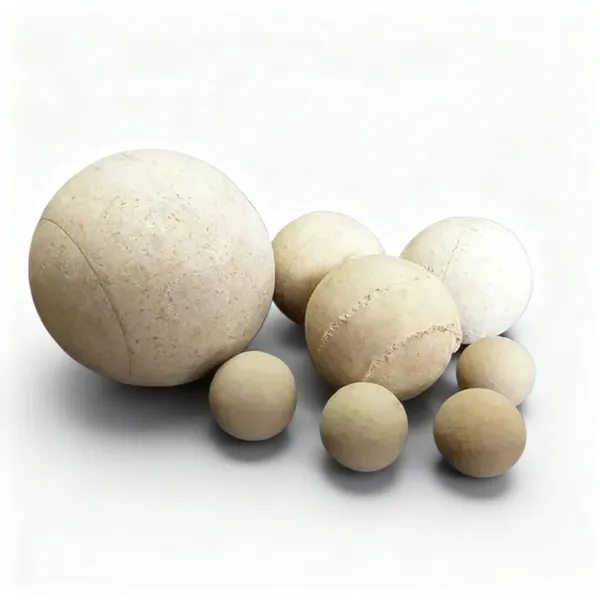 Read More
 -
Pingxiang Daier Ceramic Mini Lessing Cross Ring for High-Temperature Acid Service in Distillation
August 21, 2026H2: The Lessing Ring: An Engineering Evolution from Raschig RingThe Lessing ring, also known as the Lessing cross partition ring,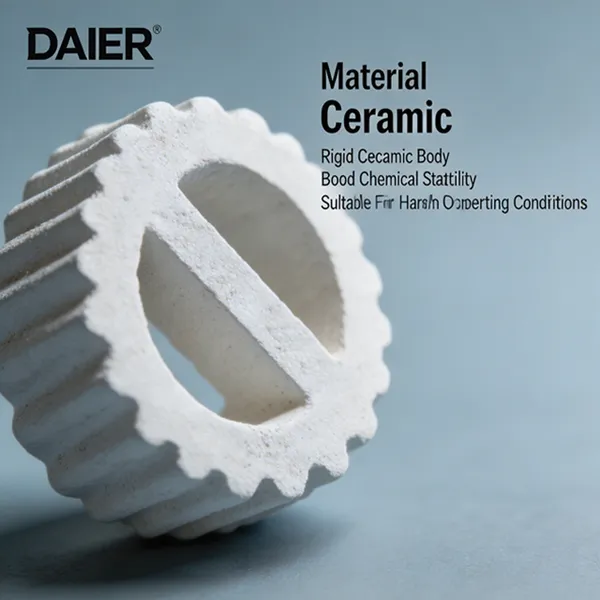 Read More
 -
Ceramic Cross Partition Ring for Sulfuric Acid Drying and Absorption Systems | Pingxiang Daier
August 20, 2026The Engineering Challenge: Acid Corrosion in Sulfuric Acid Drying and Absorption TowersSulfuric acid production facilities operate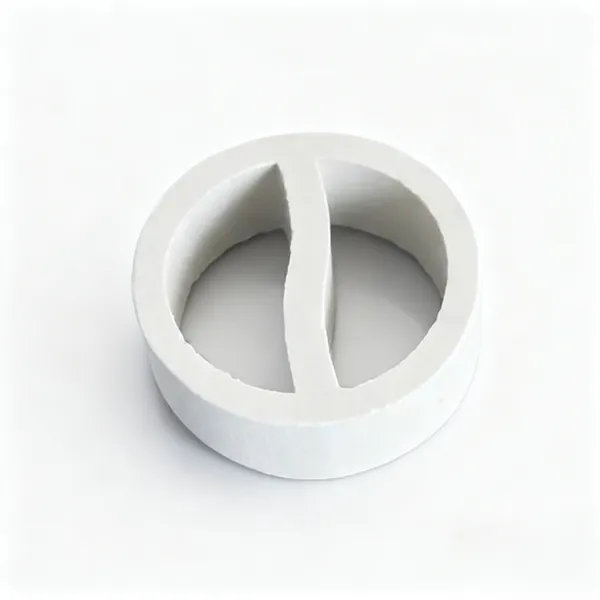 Read More
 -
Pingxiang Daier Ceramic Cascade Mini Ring (CMR): Engineering Solutions for Absorption, Distillation
August 19, 20261. The Engineering Problem: Why Traditional Packings Fall ShortIn chemical process systems, tower packing directly determines sepa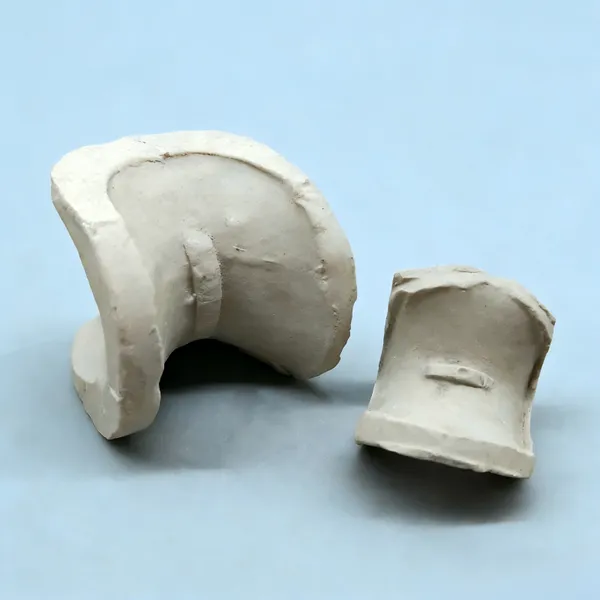 Read More

Contact Us
Recommended Products
-
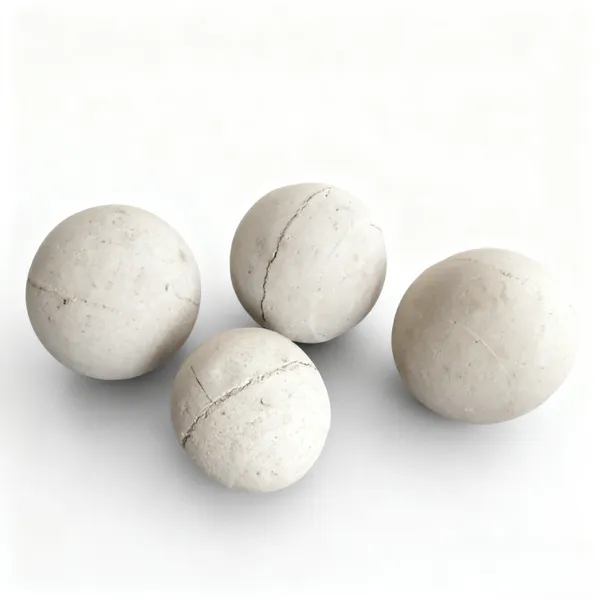
 Pingxiang Daier 92% Al2O3 High Alumina Inert Ceramic Ball Tower Packing for Catalyst Support & DistillationNegotiableMOQ: 1 Cubic Meter
 -
Pingxiang Daier Ceramic Mini Lessing Cross Ring Random Tower Packing for Distillation Absorption and Scrubbing ColumnsNegotiableMOQ: 1 Cubic Meter
-
Pingxiang Daier Ceramic Cross Partition Ring Random Tower Packing for Distillation Absorption Scrubbing Columns Acid Resistant Heat StableNegotiableMOQ: 1 Cubic Meter
-
Pingxiang Daier Ceramic Cascade Mini Ring Random Tower Packing for Distillation Absorption Scrubbing ColumnsNegotiableMOQ: 1 Cubic Meter
-
Pingxiang Daier Ceramic Intalox Saddle Ring Random Packing for Chemical Absorption Distillation Columns Mass Transfer Tower InternalsNegotiableMOQ: 1 Case
-
Pingxiang Daier Ceramic Pall Ring Random Tower Packing for Distillation Absorption Scrubbing Columns up to 1000°C Al₂O₃ 92-99%NegotiableMOQ: 1 Cubic Meter
-
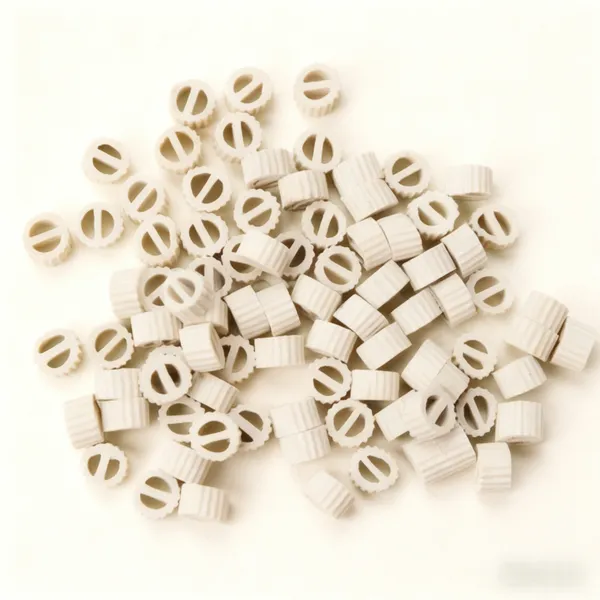
Pingxiang Daier Ceramic Triple Y Ring Random Tower Packing – Acid Resistant Up to 1000°C for Chemical Absorption Scrubbing DistillationNegotiableMOQ: 1 Cubic Meter
-
Pingxiang Daier Ceramic Raschig Ring Tower Packing Acid Resistant 1200°C for Distillation Absorption Scrubbing ColumnsNegotiableMOQ: 1 Cubic Meter
-
Pingxiang Daier Ceramic Butterfly TY Ring Random Packing for Distillation Absorption Scrubbing Towers, Acid Resistant up to 1000°CNegotiableMOQ: 1 Cubic Meter
-
Pingxiang Daier Ceramic Cross Partition Ring 50mm 80mm 100mm 120mm 150mm Acid Resistant Tower Packing for Distillation Absorption and Support LayerNegotiableMOQ: 1 Cubic Meter